Packaging guides
Folding cartons: how to choose the right box for your product
The best folding carton protects your product, works with your filling process, and presents your brand clearly. Compare product weight and dimensions, sales channel, structure, printing, and delivery requirements. Approve a sample with the actual product before authorizing production.
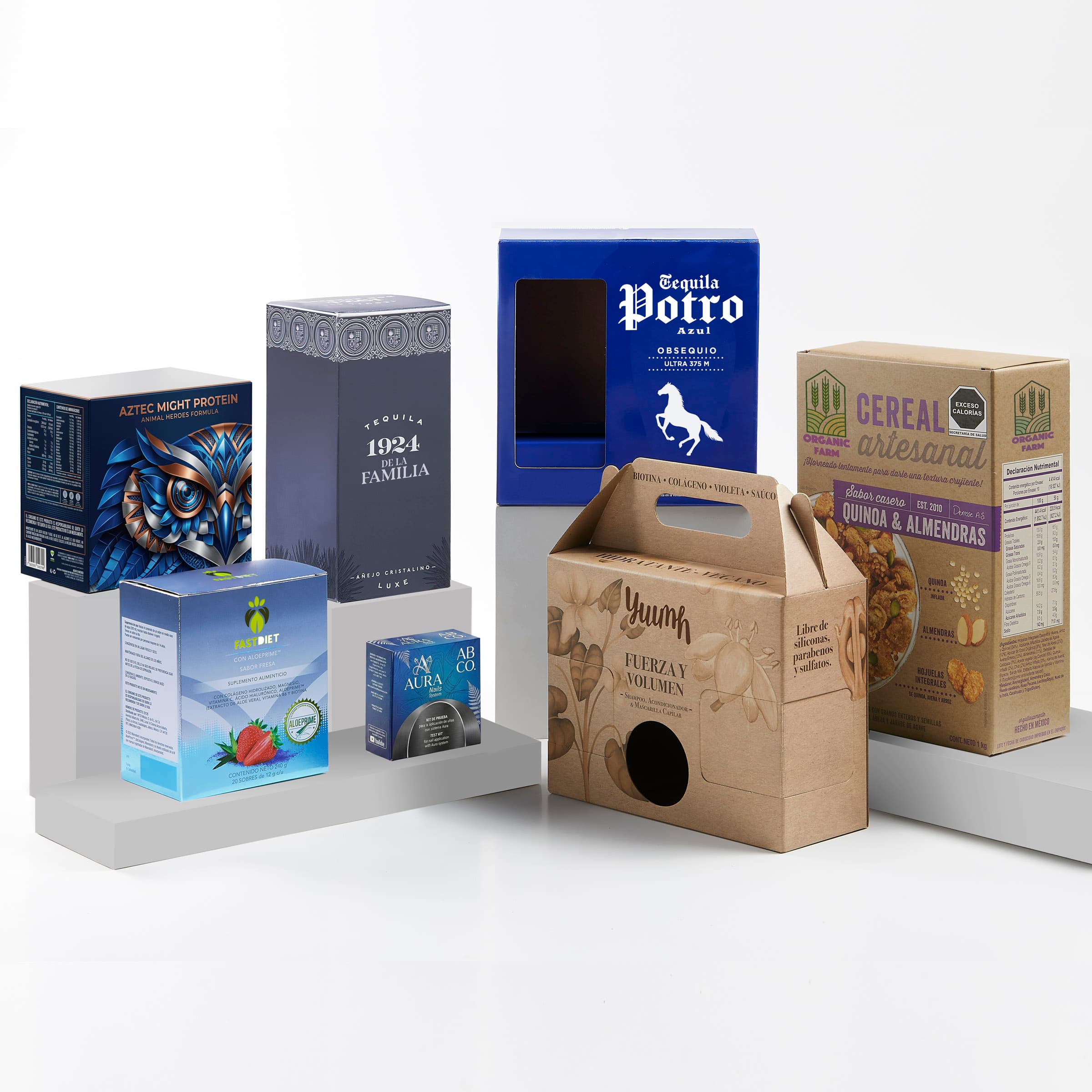
What is a folding carton?
A folding carton is a paperboard box that is cut and creased so it can fold into its finished shape. It is generally delivered flat and erected for filling. If you source packaging in Mexico, empaque plegadizo is the corresponding Spanish term.
Paperboard folding cartons and micro-corrugated packaging use different constructions. Micro-corrugated board includes a fluted layer between paper liners and is an option to assess when a product calls for a different structure. Retail packaging does not automatically replace protective transit packaging.
Which carton style should you choose?
Start with use conditions. Bring the product, weight, dimensions, and details of filling, storage, and transportation into the discussion. Then compare the structures in the table. These are starting points for sample development, not load-bearing guarantees.
For a glass container, assess movement inside the carton and support at the base. For a lightweight cosmetic product, check fit, opening, and shelf presentation. For a kit, check every component and the assembly of the full set.
Paperboard Packaging Council: common folding carton designs
| Option | When to assess it | What to validate |
|---|---|---|
| Tuck-end folding carton | Lightweight retail products | Fit, opening, and closure retention |
| Auto-bottom folding carton | When quick manual setup matters | Base support, actual load, and filling sequence |
| Micro-corrugated packaging | Projects that call for assessing a fluted structure | Pack volume, protection, and distribution performance |
The final choice depends on the product and testing of the proposed structure. No single board thickness or style works for every project.
When is higher-quality packaging worth the investment?
Turn quality into requirements you can inspect: consistent dimensions, clean folds, reliable closure, readable text, and an approved color reference. An expensive finish cannot make up for a box that does not fit the product.
Compare the complete project cost: cartons, tooling, proofs, assembly, waste, and delivery. A higher unit price may be worthwhile if it prevents a demonstrated problem in your process. Request samples and evidence before assuming savings.
- Set an approved reference sample and criteria for accepting a production run.
- Inspect the assembled carton with the product, not just artwork on a screen.
- Agree on color control and how repeat orders will be compared.
- Confirm compatibility with filling equipment and storage conditions.
Which print finishes should you consider?
Choose a finish for a specific purpose. A varnish may serve a protection or contrast requirement; embossing adds relief; hot stamping and cold foil create metallic effects. Review samples on the proposed material because the result depends on the combination of substrate, printing, and finishing.
If the goal is to highlight a name or logo, ask whether a localized accent meets the brief. Before selecting film lamination or another material combination, consider the intended use and the packaging's recovery pathway.
What does FSC mean for packaging?
FSC labels distinguish certified forest materials, recycled materials, and mixtures within its labeling categories. A label does not mean every carton is recycled, or that every order from a supplier can carry it. Request documentation and the claim applicable to your project.
Separate three questions: where the fiber comes from, what recycled content is declared, and how the finished packaging will be recovered. Review coatings and components too. ISO 9001 concerns quality management; it does not replace an environmental assessment of the packaging.
What information do you need for a packaging quote?
A clear brief lets you compare proposals on the same basis. If the structure or material is still undecided, describe what the packaging needs to achieve and share a product sample. For a US delivery, include the destination ZIP code and ask the supplier to clarify freight, delivery responsibilities, and the schedule in the proposal.
- Product, weight, dimensions, and photos or a physical sample.
- Total quantity and the breakdown by design or SKU.
- Sales channel: retail shelf, display, e-commerce, or a combination.
- Manual or automatic filling; storage and transit conditions.
- Available artwork, color references, and desired finishes.
- Documented requirements for materials, certifications, or product contact.
- Delivery location, target date, and reorder frequency.
How can Matro support your project?
Matro combines structural development, printing, and finishing for folding cartons and micro-corrugated packaging. The starting point is your product's requirements, translated into a specification you can evaluate.
Share the total quantity for your project. Packaging projects of 5,000 units or more are of particular interest, but this is not a mandatory minimum: feasibility is reviewed individually. Commercial printing and standalone finishing projects are assessed separately.
Frequently asked questions
What are the best folding carton options for retail products?
The right option meets the product and channel requirements. Compare fit, protection, assembly, presentation, and total cost, then validate a sample. No single carton style is best for every product.
Are folding cartons and micro-corrugated boxes the same?
No. Paperboard folding cartons and micro-corrugated packaging have different constructions. Micro-corrugated board includes fluting. Choose according to the structure and performance your product requires.
Does an FSC label automatically mean a carton is recyclable?
Do not infer that from the label alone. The FSC claim and recovery of the finished box are separate questions. Check materials, components, and the infrastructure where the packaging will be discarded.
Can I request a quote before my artwork is finished?
Yes. Share your product, dimensions, quantity, intended use, and target date. This helps identify structural or artwork development needed before the final specification is agreed.
Turn your questions into a clear specification
Tell us what you are packing, how many units you need, and the delivery location. Let's review the structure, printing, and finishes for your project.